
French Drain Installation Guide for Hudson Valley Homes
By Bernicker & Son Landscaping Team · March 10, 2026
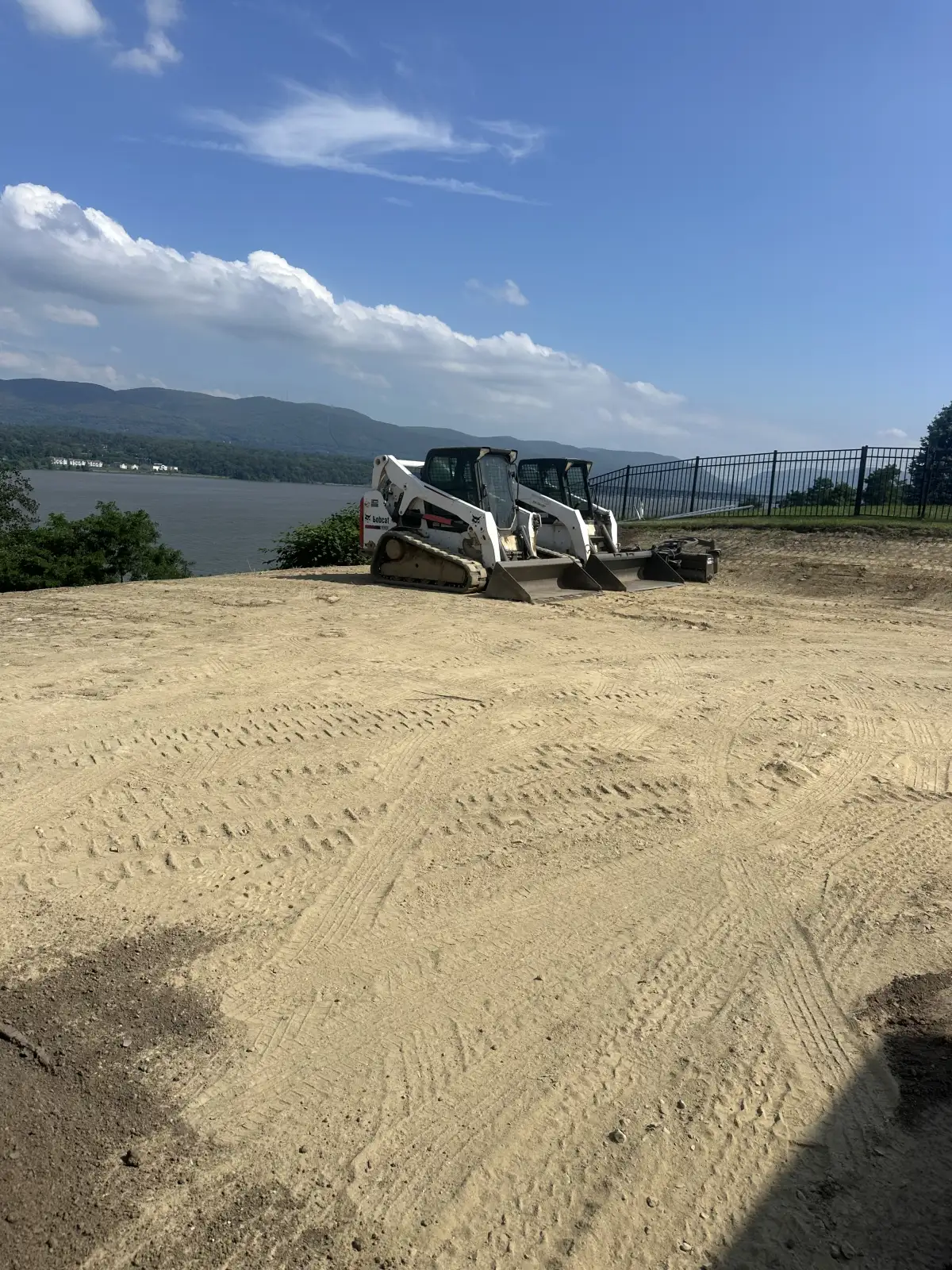
A french drain is a gravel-filled trench with a perforated pipe that redirects groundwater away from your foundation, yard, or hardscapes. In the Hudson Valley, where clay-heavy soil and seasonal rain create persistent drainage issues, french drains are one of the most effective solutions for protecting your property from water damage.
This guide covers how french drains work, the signs that you need one, the installation process, cost factors, and why professional installation makes a difference in our region.
What Is a French Drain and How Does It Work?
A french drain works on a simple principle: water flows downhill and follows the path of least resistance. The system consists of a trench dug at a slight downward slope, lined with landscape fabric, filled with gravel, and fitted with a perforated pipe at the bottom.
When groundwater saturates the surrounding soil, it seeps through the gravel into the perforated pipe. The pipe carries the water along its length, following the slope of the trench, until it reaches a designated discharge point, typically a storm drain, dry well, or a lower area of your property where the water can disperse safely.
The landscape fabric prevents soil from migrating into the gravel and clogging the pipe over time, while the gravel provides a porous channel that water moves through much faster than the surrounding soil.
Signs You Need a French Drain
Not every wet yard needs a french drain, but several common symptoms point to drainage problems that a french drain can solve:
- Standing water after rain. If water pools in your yard for more than 24 hours after a normal rainstorm, the soil is not draining fast enough. This is especially common in low spots and areas with compacted clay soil.
- Water in your basement or crawl space. Hydrostatic pressure from saturated soil pushes water through foundation walls and floor joints. A perimeter french drain intercepts this water before it reaches your foundation.
- Soggy or spongy lawn areas. Persistently wet patches that never fully dry out indicate subsurface water that is not draining. Walking on these areas damages the grass and compacts the soil further.
- Erosion along the foundation. Visible channels or bare soil where water flows against your foundation during rain means surface water is not being managed properly.
- Efflorescence on foundation walls. White, chalky mineral deposits on your basement or foundation walls indicate water has been migrating through the concrete, carrying dissolved minerals to the surface.
- Musty odors in the basement. Persistent dampness creates conditions for mold and mildew growth, which produces musty smells even when you cannot see visible water.
The French Drain Installation Process
Professional french drain installation follows a systematic process. Here is what each step involves.
Step 1: Site assessment. We evaluate your property to identify where water is coming from, where it collects, and where it needs to go. This determines the drain length, depth, slope, and discharge location. In the Hudson Valley, we also assess soil composition since clay-heavy soils affect how the drain interacts with the surrounding ground.
Step 2: Utility marking. Before digging, all underground utilities are marked through NY 811. This includes gas, electric, water, sewer, and cable lines. This step is legally required and prevents dangerous and costly utility strikes.
Step 3: Trenching. A trench is excavated along the planned route. For most residential french drains, the trench is 12 to 18 inches wide and 18 to 24 inches deep. The trench is dug with a consistent downward slope, typically 1 inch of drop per 8 feet of run, to ensure water flows by gravity.
Step 4: Fabric and gravel bed. Landscape fabric is laid along the bottom and sides of the trench with enough excess to wrap over the top. A 2-inch bed of clean, washed gravel (typically 3/4-inch stone) is placed on the bottom to support the pipe.
Step 5: Pipe installation. A 4-inch perforated PVC or corrugated pipe is placed on the gravel bed with the perforations facing downward. The pipe is connected to any cleanout access points and routed to the discharge location.
Step 6: Backfill and finishing. The trench is filled with gravel to within 4 to 6 inches of the surface. The landscape fabric is folded over the top of the gravel to create a complete envelope. Topsoil is added on top, and the area is seeded or sodded to restore the lawn surface.
French Drain Costs in the Hudson Valley
French drain installation in the Newburgh and Hudson Valley area typically costs $25 to $60 per linear foot, depending on depth, soil conditions, and pipe type. Here are common project cost ranges:
- Short drain (20-30 linear feet): $700 - $1,800. Suitable for redirecting water from a single downspout or addressing a localized wet spot.
- Standard drain (50-75 linear feet): $1,500 - $4,000. Covers a typical residential yard drainage project.
- Perimeter drain (100-150 linear feet): $3,000 - $8,000. Runs along the foundation or property edge for comprehensive water management.
- Interior basement drain: $3,000 - $10,000+. Installed inside the basement perimeter and connected to a sump pump system.
Factors that push costs toward the higher end include rocky soil that requires specialized excavation equipment, deep installations (over 3 feet), long runs to reach a suitable discharge point, and connecting to existing storm drain infrastructure.
DIY vs. Professional Installation
While french drains may appear straightforward, several aspects of the installation require experience to get right, especially in the Hudson Valley:
Slope accuracy. A french drain that is too flat will not move water effectively. One that is too steep will move water too fast, causing erosion at the discharge point. Getting the grade right over a long run requires proper surveying tools and experience.
Soil assessment. Hudson Valley soils range from clay to rocky shale. The drain design needs to account for how the surrounding soil interacts with the drainage system. Clay soils may require a wider trench and more gravel to compensate for low permeability.
Discharge planning. Where the water goes matters as much as intercepting it. Discharging onto a neighbor's property, into a wetland, or into a public right-of-way can create legal and environmental problems. A professional contractor knows the local regulations and identifies appropriate discharge points.
Protecting existing infrastructure. Underground utilities, irrigation systems, septic components, and tree root systems all need to be avoided during excavation. Damaging any of these creates problems far more expensive than the drain itself.
Maintaining Your French Drain
A properly installed french drain requires minimal maintenance, but there are a few things you can do to ensure it continues working effectively:
- Keep cleanouts accessible. If your drain includes cleanout access points, make sure they remain visible and accessible. These allow you to flush the pipe if it ever becomes slow.
- Monitor the discharge point. Check periodically to ensure the discharge end is clear of debris, sediment, or vegetation growth that could block the outflow.
- Watch for settling. Some settling of the trench area is normal in the first year. Add topsoil and reseed any sunken areas to maintain a level lawn surface.
- Avoid driving over the drain. Vehicles and heavy equipment can compress the gravel and damage the pipe. Keep heavy loads away from the drain route.
If you are dealing with drainage problems at your Newburgh, Orange County, or Hudson Valley property, Bernicker & Son Landscaping provides professional drainage solutions tailored to local soil and climate conditions. We also coordinate drainage work with hardscaping projects to ensure your patio, walkway, or retaining wall has proper water management built in from the start. Request a free estimate or call (845) 754-1009.