
Retaining Wall Planning Guide for Hudson Valley Homeowners
By Bernicker & Son Landscaping Team ·
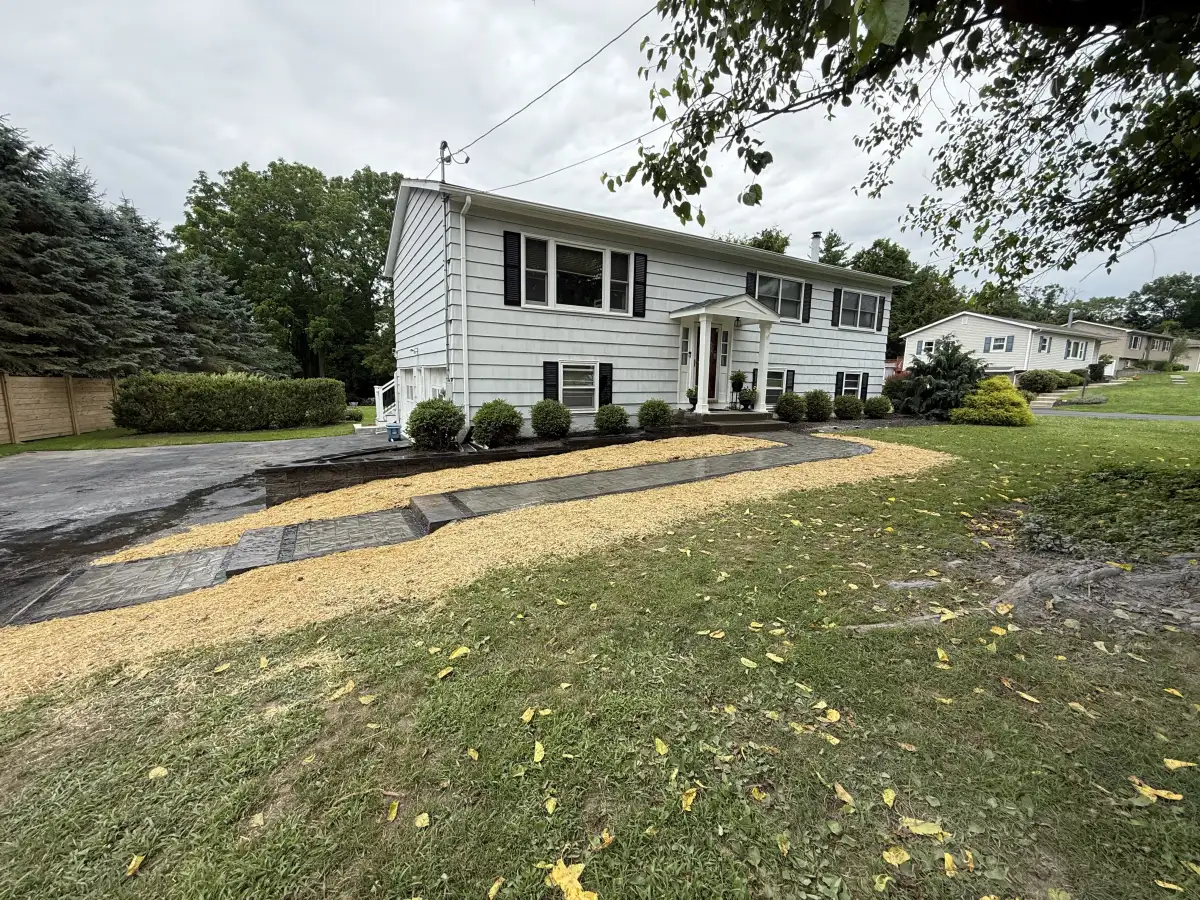
A retaining wall in the Hudson Valley typically costs $40 to $80 per square face foot for professional installation, with most residential projects falling between $4,000 and $15,000 depending on height, length, material, and site conditions. Late spring and early summer are the best time to build because the ground is thawed, drainage work can be completed before heavy summer storms, and the wall has time to settle before the first freeze-thaw cycle hits in November.
If you have been dealing with a sloping yard, eroding hillside, or wasted space on a steep grade, a retaining wall is often the most practical solution. But a wall that fails is worse than no wall at all. Poorly built retaining walls lean, crack, and eventually collapse, often taking landscaping, patios, and even structures with them. The planning stage is where most problems are prevented or created.
This guide walks you through everything you need to consider before starting a retaining wall project in Newburgh, Orange County, or the surrounding Hudson Valley, from material selection and drainage to permits and contractor selection.
Why Retaining Walls Matter on Hudson Valley Properties
The terrain in Orange County and the Hudson Valley is far from flat. Properties in Cornwall-on-Hudson and Highland Falls sit on rocky hillsides with significant grade changes. Neighborhoods in Newburgh, New Windsor, and Walden have clay-heavy soils that erode quickly on slopes. Without structural support, gravity and water slowly move soil downhill, undermining structures, burying driveways, and washing away landscape plantings.
A properly engineered retaining wall does three things: it holds soil in place, it creates usable flat areas on sloped lots, and it manages water flow behind the wall so hydrostatic pressure does not build up. The third point is the one most homeowners overlook, and it is the primary reason retaining walls fail.
Choosing the Right Material
The material you choose affects cost, appearance, longevity, and structural capacity. Here are the four most common options we install on hardscaping projects in the Hudson Valley.
Segmental Retaining Wall Block
Segmental block (brands like Unilock, Belgard, and Versa-Lok) is the most popular choice for residential retaining walls in Orange County. The blocks interlock mechanically, which provides structural stability without mortar. Walls up to 4 feet can typically be built with a gravity design (the weight of the block holds the soil). Taller walls require geogrid reinforcement, which is a high-strength mesh layer buried in the soil behind the wall at specific intervals.
As a Unilock Authorized Contractor, we have access to their full retaining wall product line, including the Estate Wall, Pisa II, and Rivercrest collections. Block walls pair well with paver patios because the colors and textures coordinate across the Unilock system.
Natural Stone
Fieldstone and bluestone walls give a rustic, traditional look that fits the Hudson Valley landscape. Natural stone is heavier per unit than manufactured block, which provides excellent gravity retention for shorter walls. The tradeoff is cost: natural stone is more labor-intensive to install because each piece is a different size and shape, requiring careful fitting. Expect to pay 20 to 40 percent more than block for comparable wall dimensions.
Poured Concrete
Poured concrete walls are the strongest option and are used for walls over 6 feet or walls that bear significant loads (like supporting a driveway or structure above). They require forms, rebar, and footings, which drives up cost and timeline. Most residential projects do not need poured concrete unless the wall height or structural requirements demand it.
Timber (Railroad Ties and Landscape Timbers)
Timber walls are the least expensive upfront but have the shortest lifespan. Pressure-treated timbers last 10 to 15 years in Hudson Valley conditions before rotting. Old railroad tie walls are common on properties built in the 1980s and 1990s, and most are now at the end of their useful life. If you have a failing timber wall, replacing it with segmental block or stone is a worthwhile investment that will last 50-plus years.
Drainage Behind the Wall: The Most Critical Detail
Water is the enemy of retaining walls. When rain saturates the soil behind a wall, it creates hydrostatic pressure that pushes outward against the face. In the Hudson Valley, our clay-heavy soils hold water much longer than sandy or loamy soils, which means pressure builds up faster and stays higher. Without a drainage system behind the wall, even a well-built structure will eventually lean and fail.
Every retaining wall we build includes these drainage components:
- Drainage aggregate. A 12-inch zone of clean crushed stone behind the wall from footing to within 6 inches of the top. This creates a fast path for water to flow down to the drain pipe instead of pressing against the block.
- Perforated drain pipe. A 4-inch perforated pipe at the base of the wall, wrapped in filter fabric, sits in the drainage aggregate and channels water to a discharge point. The pipe must daylight (exit at grade) or connect to a dry well. Dead-ending a pipe with no outlet defeats the purpose.
- Filter fabric. Non-woven geotextile separates the drainage aggregate from the native soil behind it. Without fabric, fine clay particles migrate into the stone and clog the drainage layer within a few years.
- Compacted backfill. The soil above the drainage zone is placed in 6-inch lifts and compacted with a plate compactor. Loose backfill settles unevenly and can create voids that concentrate water flow.
If a contractor quotes you a retaining wall without mentioning drainage, that is a red flag. For a deeper look at how drainage systems work and what they cost, read our French drain installation guide.
How Much Does a Retaining Wall Cost in Orange County?
Retaining wall costs in the Newburgh and Orange County area depend on wall height, total length, material, and site access. Here are the ranges we typically see:
- Segmental block wall (under 4 feet): $40 to $60 per square face foot. A 30-foot-long, 3-foot-tall wall (90 square face feet) runs roughly $3,600 to $5,400 installed.
- Segmental block wall (4 to 6 feet with geogrid): $55 to $80 per square face foot. The geogrid, additional excavation, and engineering add cost but are non-negotiable for structural integrity at this height.
- Natural stone wall: $60 to $100 per square face foot depending on stone type and wall height.
- Poured concrete wall: $75 to $120 per square face foot including footings, rebar, and forms.
These prices include excavation, base preparation, drainage, backfill, and material. Site access is a significant cost factor: if machinery cannot reach the wall location, hand-carrying materials adds labor time. Properties on steep slopes in Cornwall-on-Hudson, Highland Falls, and Beacon often require more excavation and equipment than flat-lot builds in Newburgh or New Windsor.
For a broader view of hardscaping costs in the area, see our patio cost guide for the Hudson Valley.
Permits and Regulations in Orange County
Permit requirements for retaining walls vary by municipality in Orange County and the Hudson Valley. Here is the general rule:
- Walls under 4 feet (measured from the base of footing to the top of the wall) typically do not require a building permit in most Orange County towns. However, setback requirements from property lines still apply. Check with your local building department before starting.
- Walls 4 feet and taller almost always require a building permit and may need stamped engineering drawings. The engineer calculates soil loads, specifies geogrid spacing, and designs the footing to handle the specific conditions on your property.
- Walls near wetlands, streams, or steep slopes may trigger additional reviews from the local planning board or the Army Corps of Engineers, regardless of wall height.
We handle the permit process as part of our project scope. Before starting any wall over 4 feet, we coordinate with a licensed structural engineer and submit the required drawings to your town's building department. This protects you from code violations and ensures the wall is designed for your specific site.
When Is the Best Time to Build?
The ideal window for retaining wall construction in the Hudson Valley is May through October. Here is why spring and early summer are the sweet spot:
- Ground conditions. The frost has left the soil and the ground is workable but not yet baked hard by summer heat. Excavation and grading are easier and less expensive in spring.
- Drainage testing. Spring rains let you see exactly where water flows on your property before the wall goes in. This helps the crew position drain pipes and discharge points accurately.
- Settlement time. A wall built in May has five to six months to settle and compact before the first freeze-thaw cycle. Backfill naturally compresses over time, and having warm-weather months for this process reduces the risk of winter heaving.
- Landscaping coordination. If you are combining a retaining wall with new plantings, garden beds, or sod, spring gives everything the full growing season to establish.
We schedule retaining wall projects throughout the building season, but May and June fill up fast. If you are considering a wall for this year, getting an estimate now gives you the best chance of locking in a start date before the summer rush.
Signs Your Property Needs a Retaining Wall
Not every slope needs a wall, but these situations almost always call for one:
- Soil is sliding downhill. If you see bare soil, exposed roots, or sediment collecting at the base of a slope after rain, the hillside is actively eroding. A wall stops this before it reaches your base, driveway, or neighbor's property.
- You want usable flat space. A terraced retaining wall system can turn a steep, unusable hillside into level areas for a patio, garden beds, a fire pit, or a play area. This is one of the highest-ROI hardscaping investments for sloped properties.
- Your existing wall is failing. Leaning, cracking, or bulging walls are under stress and will eventually collapse. Replacing a failing wall before it causes collateral damage to adjacent hardscaping or structures is significantly cheaper than emergency repair after a failure.
- Water is pooling against your base. On properties where the grade slopes toward the house, a retaining wall combined with proper drainage can redirect soil and water away from the base.
DIY vs. Professional Installation
Short decorative walls under 2 feet are reasonable DIY projects for homeowners with some construction experience. You can purchase segmental block from a building supply yard and stack it on a leveled gravel base without heavy equipment.
For anything taller than 2 feet, professional installation is strongly recommended. Here is why:
- Structural failure risk. A wall that collapses can damage property, injure people, and create liability. Walls over 4 feet require engineering, and even shorter walls need proper drainage and base preparation that most homeowners lack the equipment to do correctly.
- Equipment requirements. Retaining wall projects require a skid steer or mini excavator for excavation, a plate compactor for base and backfill, and often a delivery truck for block and aggregate. Renting and operating this equipment adds up quickly and carries its own risks.
- Block weight. Retaining wall block is heavy. A single Unilock Estate Wall unit weighs about 70 pounds. A modest 30-foot wall uses several tons of material. Professional crews have the equipment and experience to move this material safely and efficiently.
- Drainage expertise. Getting the drainage right is critical, and it is the part most DIY builders skip or shortcut. The cost of fixing a failed wall with drainage problems is two to three times the cost of building it correctly in the first place.
Get Started on Your Retaining Wall Project
Bernicker & Son Landscaping has built retaining walls across Newburgh, Cornwall-on-Hudson, New Windsor, Beacon, Highland Falls, and the surrounding Hudson Valley communities. We handle everything from the initial site evaluation and engineering coordination through construction and final landscaping, so you have one point of contact for the entire project.
If you have a slope that needs attention, an existing wall that is failing, or you want to create usable outdoor space on a graded lot, we can help. Request your free estimate or call (845) 754-1009 to schedule a site visit this spring.