
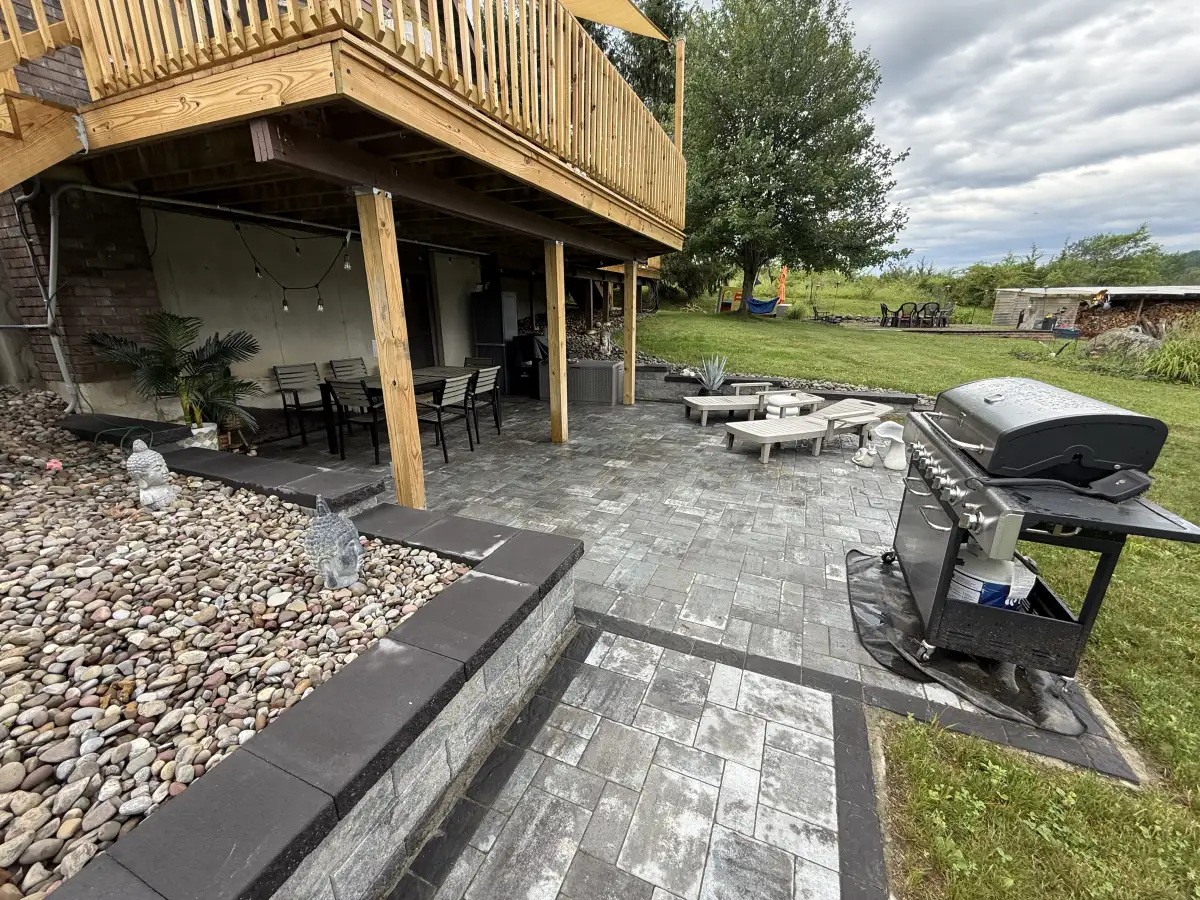
By Bernicker & Son Landscaping Team ·
A hardscape estimate can look complete while leaving the most important decisions unresolved. The surface material and total price matter, but so do the finished grade, the support below the surface, the route water will take, the care the material needs, and the work included around the edges of the project.
Those details deserve extra attention on Newburgh properties with roof runoff, compacted ground, sloped yards, or tight driveway-to-yard access. Before booking hardscaping services, use the six questions below to find out whether the proposal fits the property as well as the design.
1. What should the finished space make easier?
Start with the way you want to use the area. A patio for a dining table needs comfortable circulation around the chairs. A front walk should connect parking and the entry without an awkward step or turn. A wall may need to manage a slope, create a usable terrace, or connect elevations with stairs.
The answer helps set dimensions and priorities before material selection begins. It can also reveal related needs. A patio plan may need to account for doors, grilling space, downspouts, and future lighting. A retaining wall may change lawn access or the shape of nearby planting beds. Discussing daily use first reduces the risk of building an attractive feature that does not solve the original problem.
2. How will the project change drainage and runoff?
Any new hard surface can change where rainwater travels. During the site walk, point out downspouts, driveway runoff, soft areas, erosion, or ponding that appears after storms. Ask where water will leave the proposed surface and what it will cross next.
Newburgh is not one permitting jurisdiction: a property may fall under the City or Town, and both take stormwater management seriously. The project plan should identify the responsible municipality and account for the actual site rather than relying on a generic pitch. If water is already affecting the yard, compare the hardscape layout with appropriate drainage solutions before the elevations are finalized. The Newburgh service-area guide also explains why grade, runoff, and access are important local planning factors.
3. What work is included below and around the surface?
A finished paver or stone surface does not show the excavation, prepared subgrade, compacted base, pitch, edge support, wall drainage, or joint treatment beneath it. Ask the contractor to explain the proposed preparation in plain language and connect it to the conditions found on the property.
The written scope should also cover demolition, hauling, material staging, cleanup, and restoration. If equipment must cross the lawn or a fence panel must be removed, confirm what happens afterward. If disturbed areas will need topsoil, seed, sod, or planting repair, make sure the proposal says whether that work is included or excluded. This is often where two similar-looking estimates turn out to cover different amounts of work.
4. What are the tradeoffs of this material and layout?
Hardscaping creates useful, durable outdoor space, but it also replaces some planted or open ground and can be difficult to change later. A larger surface may improve circulation while increasing the amount of runoff that must be managed. A detailed pattern or many cut edges may suit the design but affect repair and maintenance. The right balance depends on how the space will be used.
Ask how the proposed material handles stains, joint wear, weeds or moss, snow removal, ice treatment, and isolated repairs. Find out whether sealing is optional or recommended for the selected product and what repeat care it would require. Maintenance guidance should be specific to the material and joint system—not a blanket promise that every hardscape is maintenance-free.
5. Is late summer or fall the right scheduling window?
Fall can be a workable time for some hardscape projects, but homeowners should not assume it is automatically less expensive or suitable for every scope. Material availability, current workload, weather-sensitive steps, inspections, and the condition of the access route all affect scheduling.
Ask for an expected start window, an estimated construction duration after work begins, and the conditions that could shift either one. Also discuss what happens to disturbed lawn or planting areas late in the season. A hardscape may be ready for use while surrounding restoration needs a different weather window. Planning that sequence before booking gives a more realistic picture than choosing a season based only on price.
6. What warning signs and warranty terms should I understand?
Ask what normal settling or weathering looks like and which changes deserve a prompt call. Persistent pooling, expanding low spots, loose edge units, washed-out joints, unexpected wall movement, or recurring cracks can indicate that drainage, support, roots, or another site condition needs attention. Routine cleaning and inspection also make small concerns easier to notice.
Warranty terms should be written and clear about duration, exclusions, required maintenance, and the claim process. Material manufacturer coverage and contractor workmanship coverage are separate. Bernicker & Son is an Unilock Authorized Contractor, but the exact terms still depend on the selected products and proposal. Before deciding, review the company’s completed hardscaping work and source-backed customer reviews, then compare the scope you are being offered.
Frequently Asked Questions
What are the drawbacks of adding hardscaping?
Hardscaping replaces some planted or open ground, can change runoff, and may be difficult to alter after installation. It also needs material-specific care. Those tradeoffs are easier to manage when the layout, drainage, access, and long-term use are considered before construction.
Is fall a good time to schedule hardscaping in Newburgh?
Fall can be workable for some projects, but it is not automatically cheaper or appropriate for every scope. Ask about the expected start window, material lead times, weather-sensitive work, inspections or approvals, and lawn or planting restoration before choosing a season.
What should be included in a hardscaping estimate?
A useful written estimate identifies dimensions, materials, demolition, excavation, base preparation, drainage, edge or wall details, access, hauling, cleanup, restoration, allowances, exclusions, and the process for approving changes.
What maintenance does a hardscape need?
Care depends on the material and joint system. Common needs include cleaning, prompt stain treatment, weed or moss management, joint maintenance, careful snow and ice treatment, and periodic checks for settlement, loose units, drainage problems, or wall movement.
Do hardscaping projects in Newburgh require permits?
Requirements depend on the property, the project, and whether the address is governed by the City or Town. Walls, structures, utilities, setbacks, drainage changes, and other site conditions may affect review. Confirm the responsible municipality and approval duties before scheduling.