
Retaining Wall Contractor in Newburgh & the Hudson Valley
Structural and decorative retaining walls built with attention to drainage, base preparation, grades, and long-term performance.
Walls Built Around Grade, Drainage, and Use
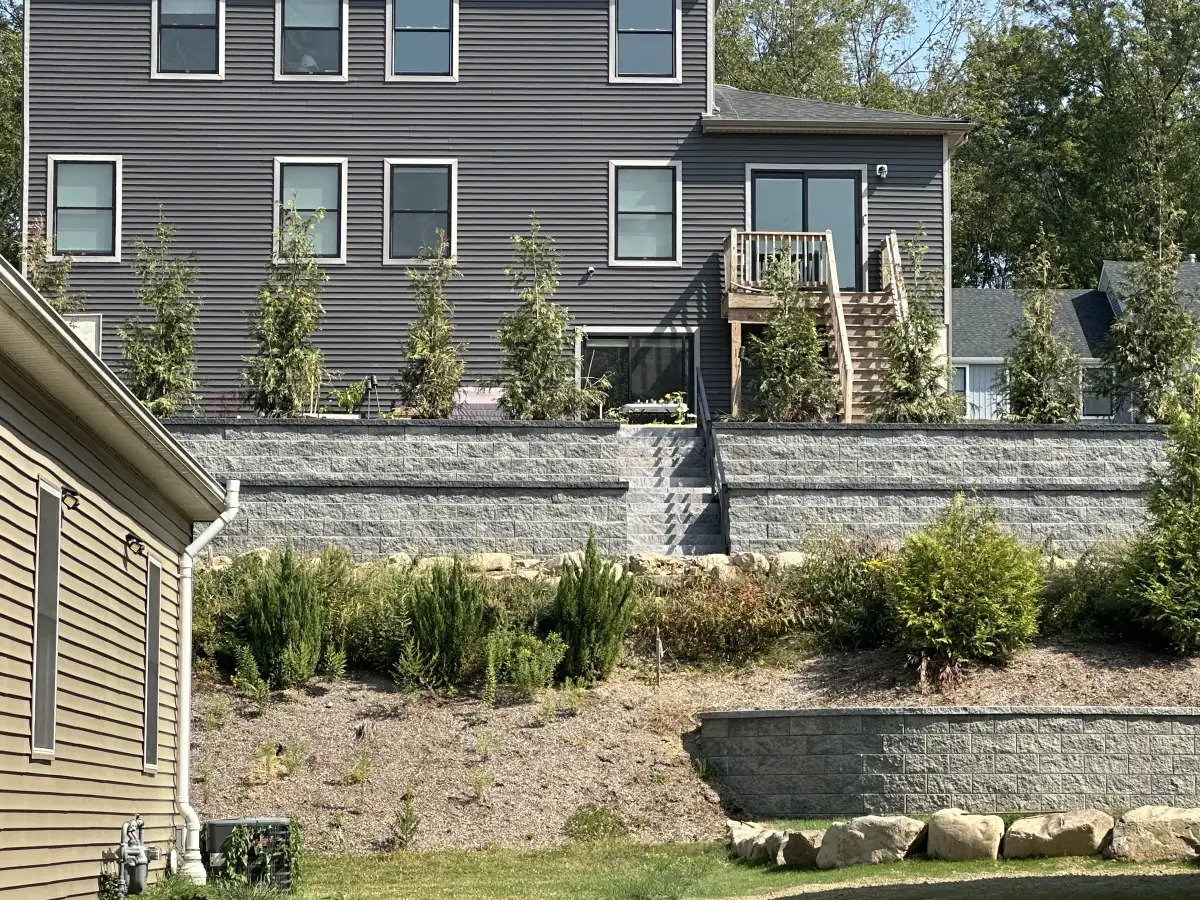
A retaining wall has to do more than look finished from the street. In Newburgh and the Hudson Valley, walls deal with clay soil, seasonal saturation, freeze-thaw movement, driveway runoff, and sloped yards that can push against block or natural stone over time. Bernicker & Son starts with the reason the wall is needed: holding a bank, framing a patio, supporting a walkway, creating usable lawn space, or correcting erosion around a driveway or base.
That planning step guides wall height, base depth, drainage stone, pipe placement, geogrid needs, cap selection, and how the finished grade should meet surrounding lawn, planting beds, steps, or hardscape surfaces. We explain the practical options before work begins so homeowners understand what is decorative, what is structural, and what details protect the wall after heavy rain.
- Segmental block and natural stone wall options
- Drainage stone, pipe, and fabric planned before backfill
- Wall layout coordinated with patios, steps, beds, and lawns

The Base and Backfill Matter Most
Most wall failures begin below grade. A rushed base, poor compaction, or missing drainage can make even good materials shift. Our wall installations focus on excavation, compacted aggregate, level first courses, clean stone behind the wall, and controlled water movement. Where the slope or wall height calls for it, reinforcement is considered early rather than added as an afterthought.
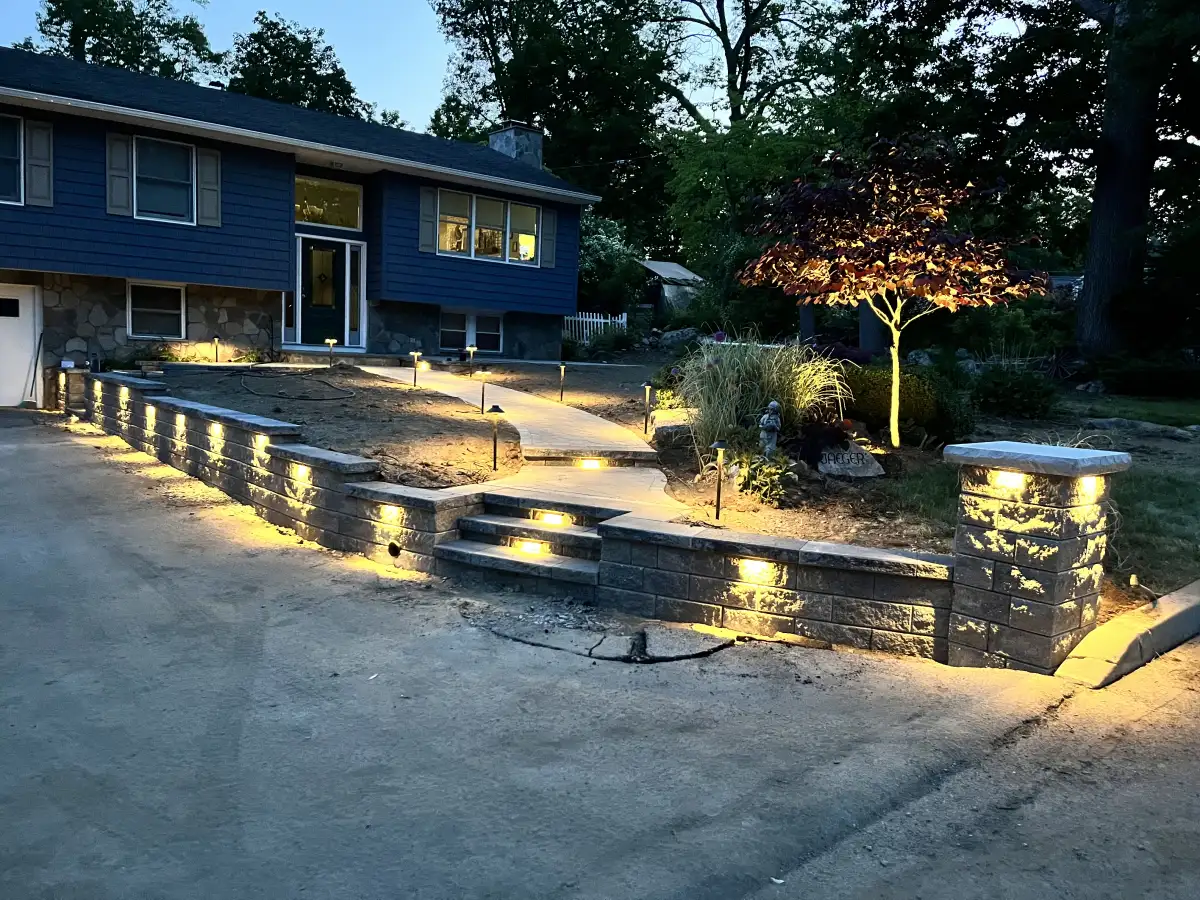
The same care applies to the visible finish. Caps, corners, curves, transitions, and planting bed edges are laid out so the wall feels integrated with the property instead of looking like a repair strip. For homes with outdoor living plans, we coordinate retaining walls with patios, fire pits, walkways, and landscape beds so the finished space works as one project.
- Compacted base preparation and level first course
- Backfill designed to relieve water pressure
- Clean transitions to patios, turf, driveways, and planting beds
Retaining Wall Estimates for Orange County Properties
Retaining wall pricing depends on access, excavation, wall height, drainage requirements, material selection, haul-off, and whether steps or adjacent hardscape surfaces are included. A small garden wall is very different from a structural slope wall near a driveway. During the estimate, we look at where equipment can reach, how water enters the area, and what the wall needs to support.
Bernicker & Son serves Newburgh, New Windsor, Cornwall-on-Hudson, Beacon, Marlboro, Highland, Walden, and nearby Hudson Valley communities. We keep the scope direct, explain tradeoffs, and build walls meant for real local conditions rather than a quick cosmetic fix.
- Free on-site estimates for wall repairs and new walls
- Material guidance for budget, appearance, and durability
- Service across Newburgh, Orange County, and the Hudson Valley
Start With the Grade and the Water Behind It
A retaining wall estimate should identify what the wall is holding, where water collects, how tall the wall needs to be, and what will sit above or below it. Those details affect base depth, drainage stone, pipe placement, fabric, reinforcement, and material selection.
Bernicker & Son reviews the slope, access, nearby driveways, patios, steps, beds, and lawn transitions before recommending a wall system.
That planning helps separate decorative garden walls from walls that need more structural attention.
Base Preparation Determines Wall Performance
Most wall problems begin where customers cannot see them: excavation, compaction, drainage, backfill, and the first course.
We explain those details during the estimate because they are what help the wall handle rain, frost, and soil pressure.
Support, Access, Planting, and Usable Space
A wall may hold a bank, frame a patio, protect a driveway edge, create level lawn, or replace a failing slope. Each purpose changes the layout and materials.
We also consider what happens around the wall after installation, including mowing room, bed maintenance, steps, caps, and transitions to existing hardscape.
When replacing a failed wall, we look for the cause so the new work does not repeat the same problem.
Block, Stone, Caps, Drainage, and Finish
Customers can choose between segmental block, natural stone, and related hardscape materials depending on appearance, budget, and wall requirements.
Bernicker & Son outlines the selected material, drainage approach, access needs, and cleanup plan in the proposal.
The result is a wall scope that is easier to compare and built around real Hudson Valley conditions.
Retaining Walls Need More Than a Visible Face
A retaining wall has to manage soil pressure, water, grade changes, and the way people use the space around it. Bernicker & Son reviews wall height, length, slope, access, nearby structures, drainage, soil conditions, and the finished purpose of the wall before recommending materials. A small garden wall, a driveway edge, and a structural slope repair all require different planning.
Drainage is one of the most important details. Water trapped behind a wall increases pressure and can lead to bulging, settlement, or failure. A durable wall uses proper base preparation, clean stone, fabric, backfill, and outlet planning. For taller or more complex walls, engineering or municipal review may be required. We identify those considerations early so the estimate reflects the real scope.
The surrounding landscape matters too. A wall may create a level lawn, support a patio, frame steps, hold a planting bed, or protect a driveway. Caps, curves, corners, mowing strips, bed edges, lighting, and access routes all affect the finished look and maintenance. We help customers choose a wall that solves the grade problem and fits the property.
Access and staging can also affect cost. Wall block, stone, gravel, and excavated soil are heavy materials that need room for delivery and movement. We review where materials can be placed, how equipment can reach the wall line, and how the surrounding lawn or driveway will be protected during construction.
What to Know Before Pricing a Wall
Why do retaining walls fail?
Many failures come from poor base preparation, missing drainage, weak backfill, or a wall that was not designed for the load behind it. We look for those issues when replacing an old wall.
Do I need a permit or engineering?
Requirements vary by municipality, wall height, location, and site conditions. Taller walls and walls near structures, driveways, or property lines often need additional review.
Can a wall be part of a larger hardscape?
Yes. Retaining walls often pair with patios, steps, walkways, plantings, drainage work, and lawn grading to create more usable outdoor space.
Build or Replace a Retaining Wall
Send the wall location, height concerns, and drainage issues so we can review the site.
Request Retaining Wall Pricing