
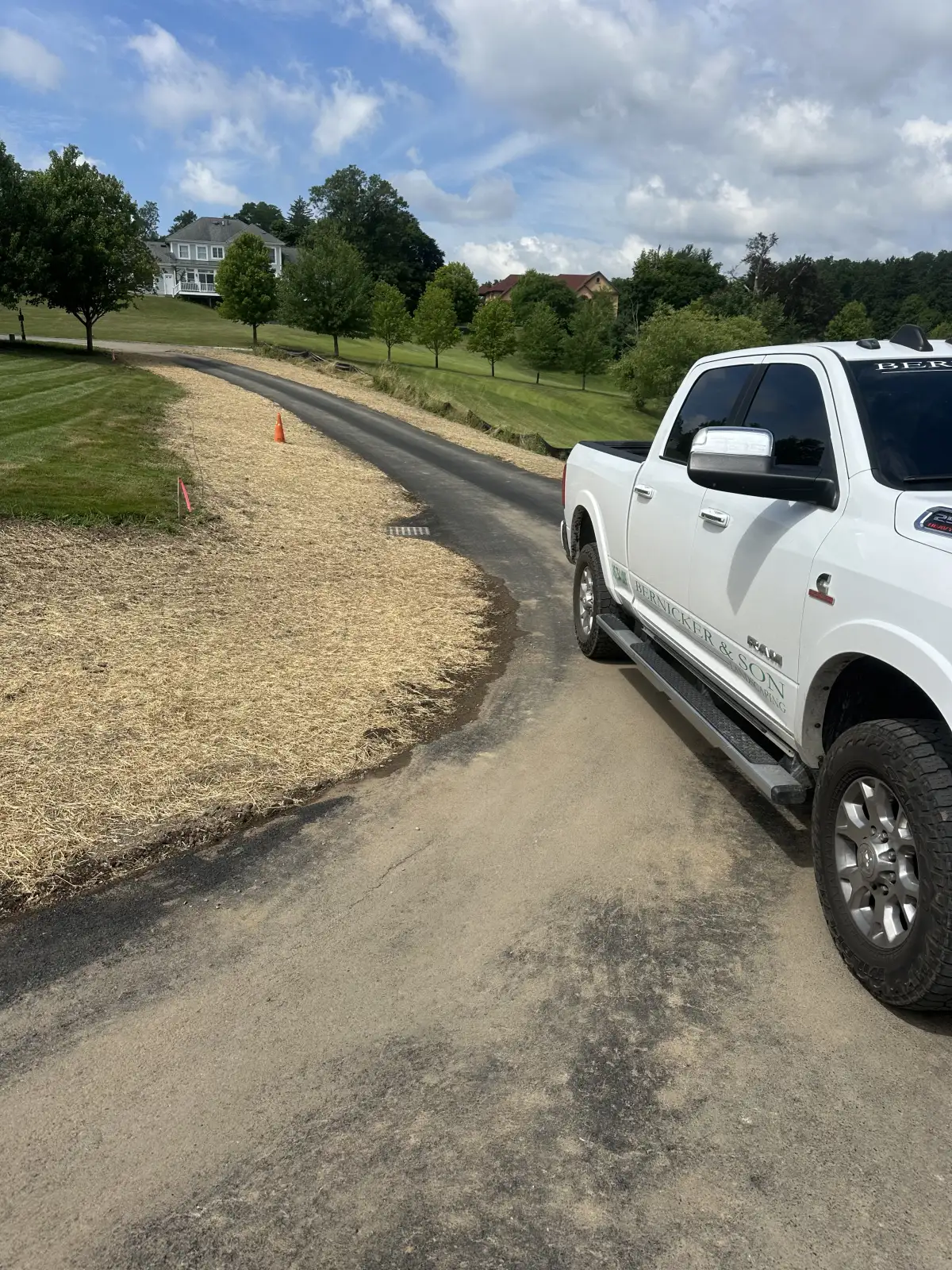
Landscape Excavation Services in Newburgh & Orange County
Careful excavation and site preparation for outdoor projects where grade, access, drainage, and cleanup matter.
Excavation for Landscape and Hardscape Projects
Most outdoor projects depend on excavation before anything visible is installed. Patios need the right base depth. Retaining walls need cut, base, and backfill space. Drainage systems need trenches with correct slope. Sod and lawn repairs need grading and soil preparation. Bernicker & Son handles landscape excavation as part of complete property improvement work, which keeps the digging connected to the final result.
We plan access, utility marking, soil conditions, haul-off, staging, and how the finished grade should meet lawns, beds, driveways, and hardscape surfaces. That coordination helps avoid over-digging, poor transitions, and water problems after the project is complete.
- Excavation for patios, walls, drainage, grading, and lawn prep
- Site access and utility considerations before work begins
- Finished grade planned around the final landscape
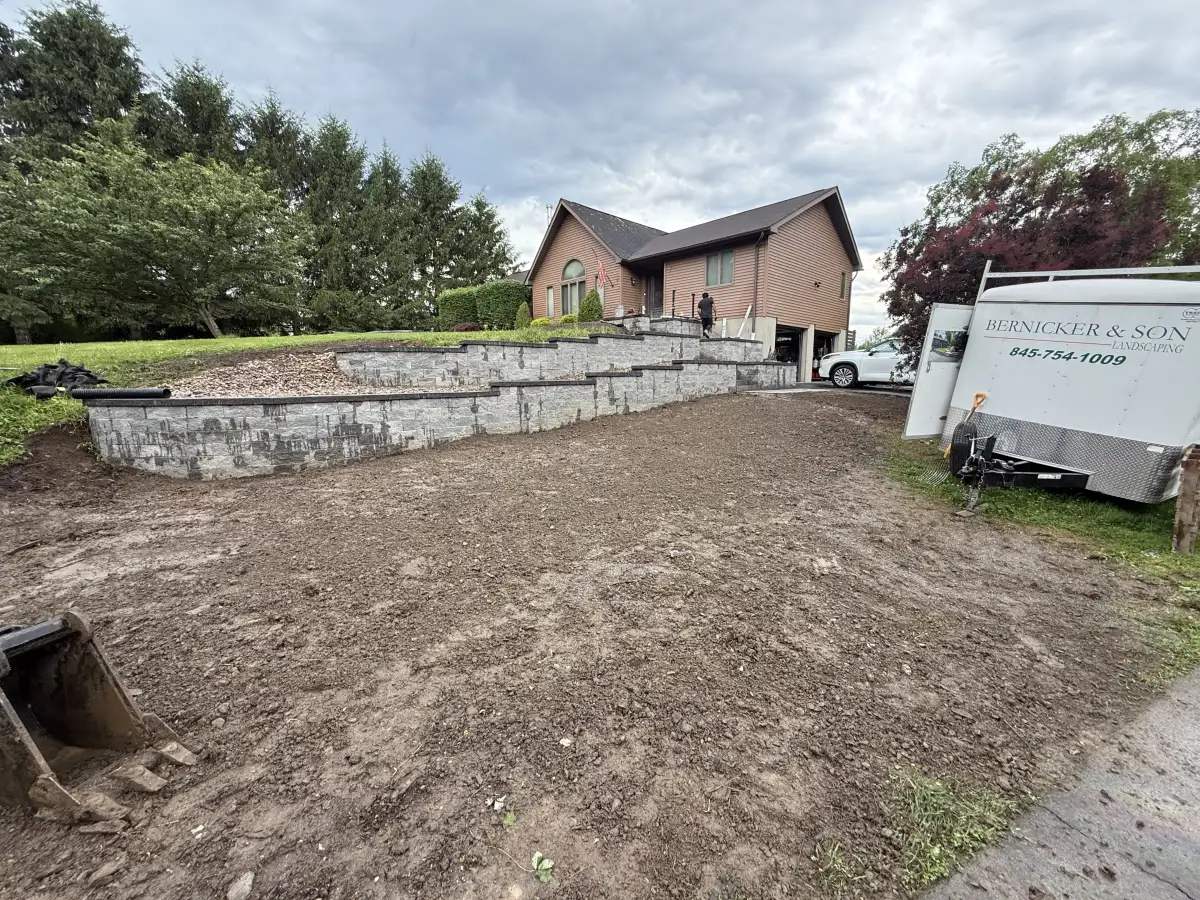
Digging With Water Movement in Mind
In the Hudson Valley, excavation has to account for water. Clay-heavy soil, slopes, roof runoff, and freeze-thaw cycles can turn a simple dig into a long-term issue if grades are wrong. We pay attention to where water comes from, where it should go, and how excavated areas will be restored.
For drainage work, that means trench depth, pipe slope, gravel, fabric, and discharge. For patios and walls, it means base preparation and backfill that protect the structure. For lawn work, it means grading soil so water does not sit against the house or collect in low spots.
- Grading planned to reduce standing water
- Drainage trenches installed with proper slope and materials
- Base excavation for stable hardscapes
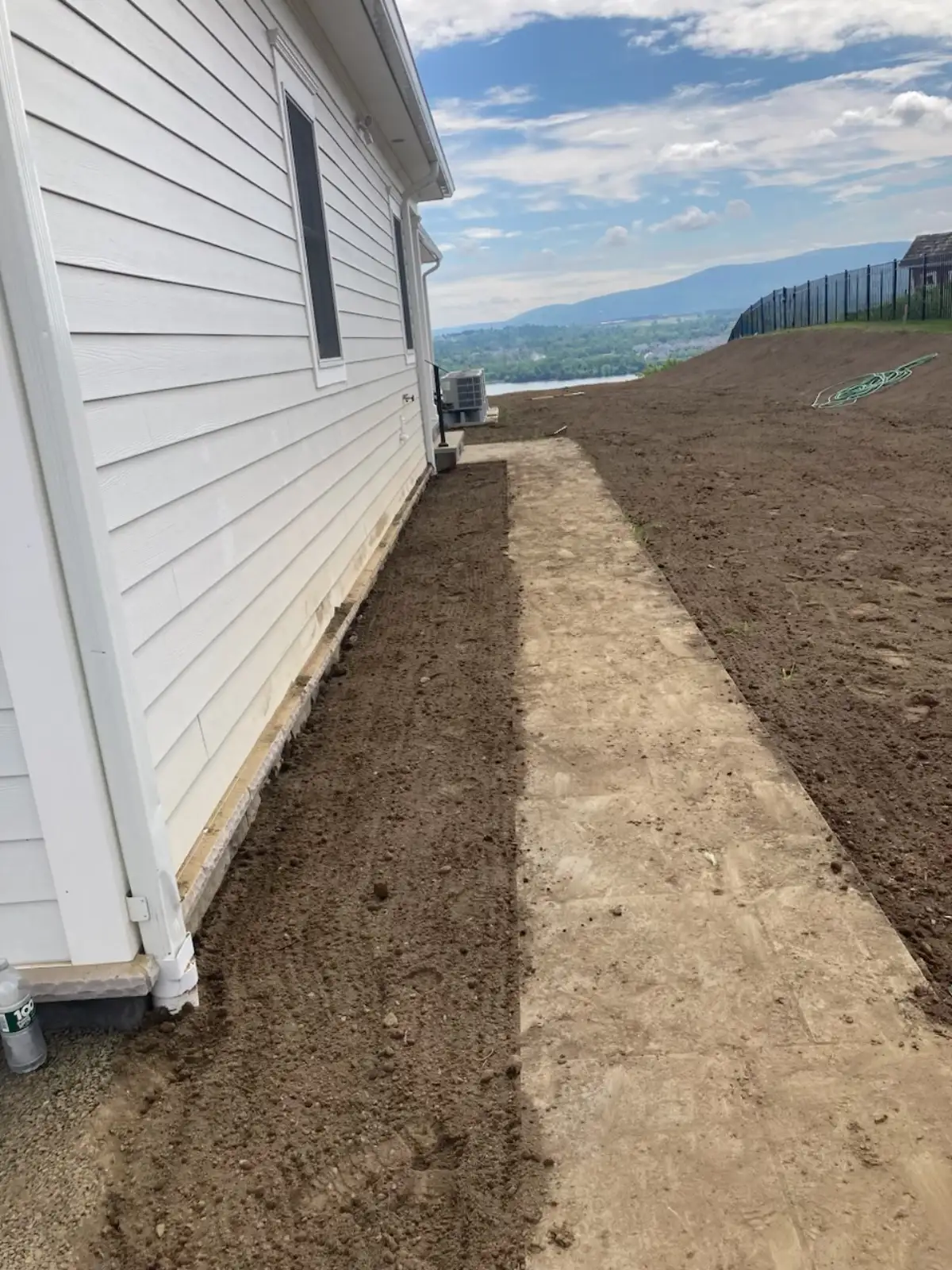
Excavation Estimates for Outdoor Improvements
Excavation cost depends on equipment access, soil type, depth, haul-off, utilities, restoration, and the final project being built. A narrow side yard drainage trench is very different from a patio excavation or a retaining wall cut. We review the site before pricing so the scope is accurate.
Bernicker & Son provides landscape excavation as part of outdoor projects in Newburgh, Orange County, and surrounding Hudson Valley communities. The crew keeps the work area organized and restores the site according to the project scope.
- Free estimates for excavation tied to landscape projects
- Equipment and crew suited to residential and commercial sites
- Cleanup and restoration included in the project plan
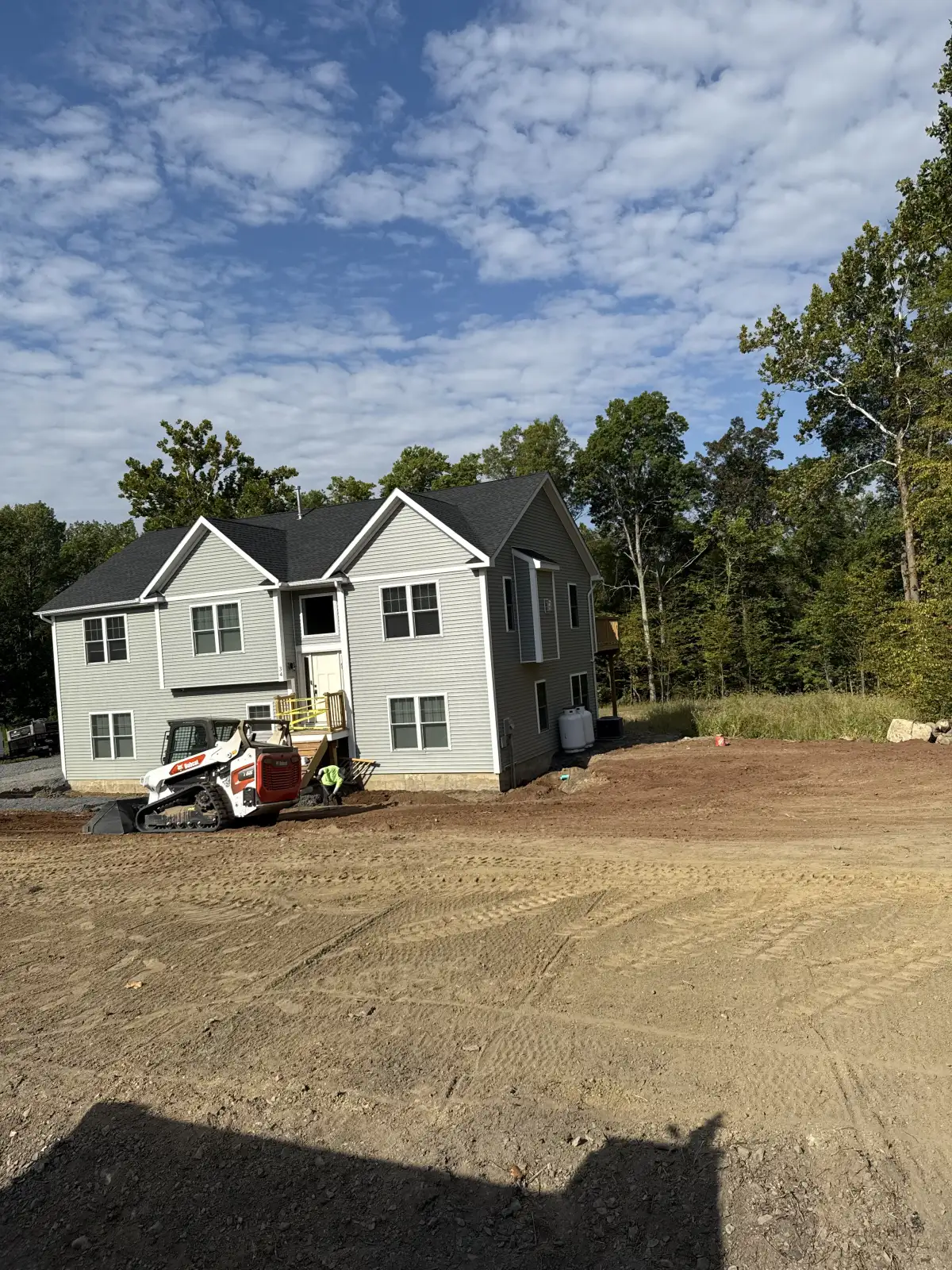
Before We Bring Equipment Onto the Property
Landscape excavation needs more planning than simply digging to a depth. Access, underground utilities, soft turf, haul-off, tree roots, septic areas, and the finished grade all shape how the work should be staged.
Bernicker & Son connects excavation to the final improvement, whether the project is a paver patio, retaining wall, drainage trench, lawn repair, or grading correction. That keeps the earthwork aligned with the surface customers will actually use.
We review the work zone, protection areas, and restoration expectations so the project does not create unnecessary damage around the dig.
Digging With the Finished Surface in Mind
Patios need compacted base depth, walls need room for drainage stone and backfill, and lawns need smooth grade transitions that can be mowed safely.
Our crew sets excavation expectations around those outcomes instead of treating the dig as a separate job from the landscape.
Equipment Routes, Soil, and Haul-Off
The estimate identifies how equipment can reach the work area, where material can be staged, and whether excavated soil can stay on site or must be removed.
Wet clay, stone, roots, and tight side yards can change the sequence. We point out those issues early so the customer understands the plan before work starts.
When excavation supports drainage, we also confirm pipe slope and discharge direction before trenches are opened.
Leaving the Yard Ready for the Next Step
Excavation should finish with a usable site, not an unfinished work area. Depending on the project, restoration may include rough grading, topsoil, seed, stone, base material, or preparation for pavers and wall block.
Bernicker & Son explains what cleanup is included and what finish work follows the dig so homeowners can plan around the full project, not just the equipment day.
That clarity is especially important for occupied homes and businesses where driveways, gates, and walkways need to remain manageable.
What We Review Before Digging
Landscape excavation affects the rest of the property, so the planning starts before equipment arrives. We look at machine access, gate width, driveway protection, slope, existing drainage, underground utilities, tree roots, septic areas, and where removed soil or stone can be staged. A narrow side yard requires a different setup than an open backyard, and a wet clay site requires a different sequence than dry, workable soil.
For patios and walkways, excavation depth must leave room for a compacted base, bedding layer, pavers, and the correct finished height at doors, steps, and lawn edges. For retaining walls, the cut needs space for base material, wall block, drainage stone, fabric, and backfill. For french drains and downspout extensions, the trench must hold grade so water moves to a safe outlet instead of sitting in the pipe.
We also consider the cleanup plan. Some projects finish with rough grade because another phase follows. Others need topsoil, seed, erosion control, gravel, or a prepared hardscape base. Setting that expectation in the estimate helps customers understand the full cost and timeline, not just the day machinery is on site.
On active homes and commercial properties, we plan the sequence around access that must stay usable. That can include protecting driveway edges, keeping gates clear, staging stone away from traffic, and scheduling haul-off so piles do not sit in the way longer than necessary. Those details make the excavation less disruptive while still giving the finished patio, wall, drain, or lawn repair the preparation it needs.
Clear Answers for Homeowners and Property Managers
Do I need excavation before a patio or wall?
Most lasting hardscape projects need excavation. The base depth, drainage, and compacted material below the surface are what keep pavers level and walls stable through Hudson Valley freeze-thaw cycles.
Can excavation fix standing water?
Excavation can be part of the solution when it supports grading, a french drain, dry well, swale, or downspout extension. We review the water source and outlet before recommending a drainage route.
What if equipment access is tight?
Limited access changes the equipment, labor, staging, and timeline. Bernicker & Son reviews access during the visit so the proposal reflects the real work required.
Need Excavation for an Outdoor Project?
Share the site concern, access details, and project goal so we can price the work accurately.
Request an Excavation Estimate