
By Bernicker & Son Landscaping Team ·
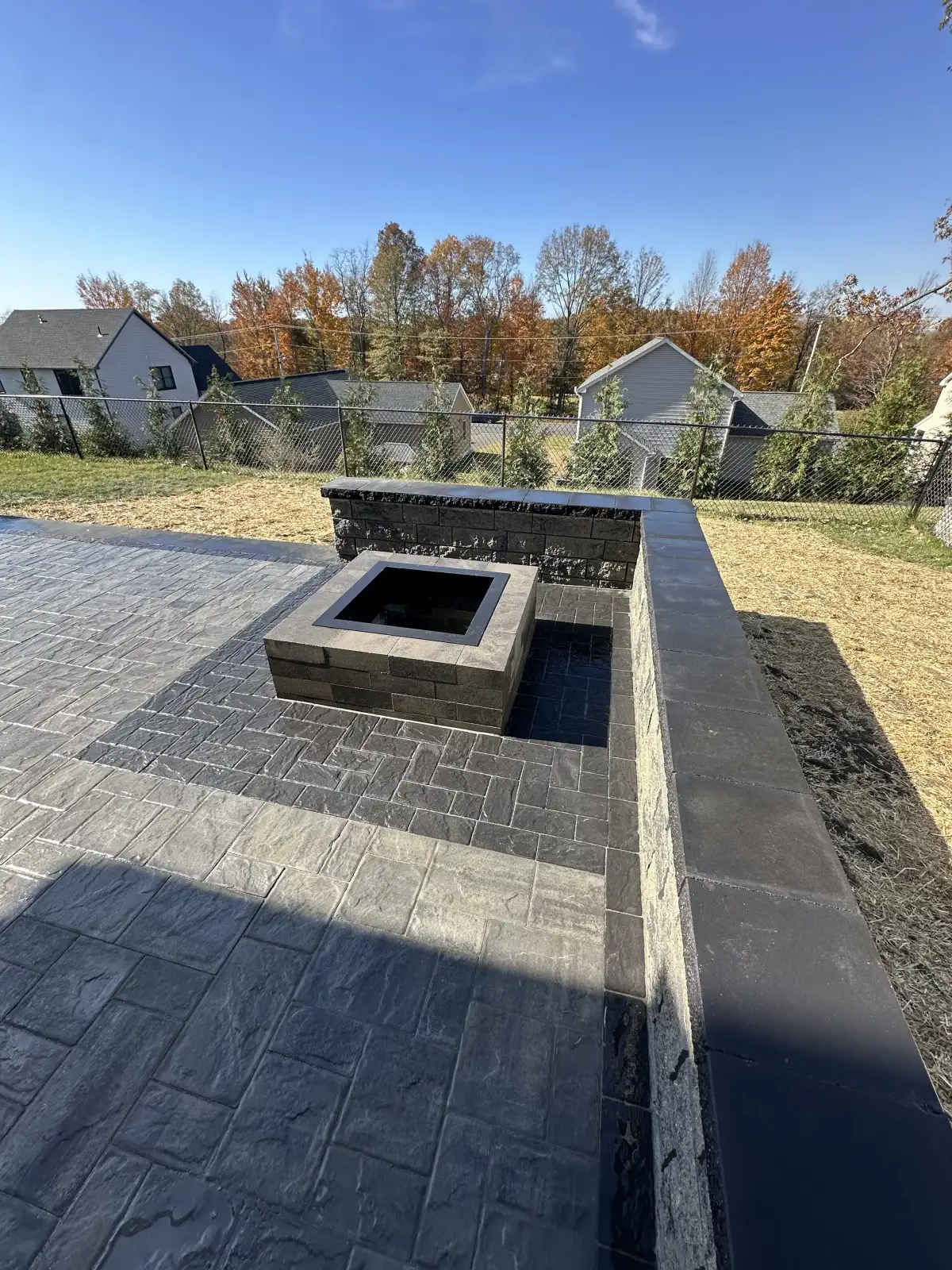
A patio, walkway, retaining wall, fire pit, or outdoor kitchen may look straightforward in a finished photo. The decisions behind it are not. Before hiring a hardscaping contractor, Newburgh homeowners should understand how the proposed layout responds to water, grade, access, winter conditions, and the way the space will actually be used.
The questions below turn a broad idea into a proposal you can compare. They apply whether you are planning a full outdoor living area or a smaller entrance improvement. For an overview of available project types, start with Bernicker & Son's hardscaping services.
1. What should this hardscape make easier?
Start with function before selecting a color or pattern. A dining patio needs enough room to move behind chairs. A front walk needs a comfortable route from parking to the entrance. Steps and walls need to resolve a grade change without creating awkward transitions. A fire pit area needs a layout that accounts for seating and circulation.
Write down the two or three most important outcomes and ask how the proposed dimensions support them. This keeps the project focused and can prevent spending on square footage or features that will not improve daily use.
2. Where will water go after the project is built?
Hard surfaces shed water instead of absorbing it. On a Newburgh property, roof runoff, driveway flow, sloped ground, and existing wet areas may all affect the finished elevation. Point out where puddles form, where downspouts discharge, and what sits downhill from the project area.
Ask where water will enter the hardscape, how it will move across or around it, and where it will safely leave. If the yard already shows ponding or erosion, the hardscape plan may need to coordinate with drainage work. The Newburgh service-area guide covers more local factors to bring up during an estimate.
3. What preparation is included below the finished surface?
The visible material is only part of the installation. Ask the contractor to explain demolition, excavation, subgrade preparation, base material, compaction, pitch, edge restraint, joint treatment, and wall drainage where relevant. The answer should match the site and the chosen material rather than relying on a single recipe for every property.
A written proposal should also identify hauling, disposal, equipment access, material staging, cleanup, and restoration. These items often explain why two estimates that appear similar at first have different totals.
4. Is the simplest option also the right option?
Homeowners researching the least expensive hardscape should compare complete installed scopes, not just surface prices. The most economical plan is often a compact, straightforward layout with limited demolition, easy access, standard materials, and few elevation changes. Preparation, edging, drainage, hauling, steps, and lawn repair can outweigh a small difference in material cost.
Ask for a base option that solves the main need and separate alternates for borders, seating walls, fire features, or premium materials. If a patio is the priority, Bernicker & Son's patio installation service explains the planning factors that belong in that comparison.
5. What are the drawbacks of the proposed hardscape?
A contractor should be able to discuss tradeoffs, not only benefits. Adding hardscape reduces some open or planted ground, can change runoff, introduces joints and edges that need care, and may be costly to alter later. Dark materials can feel hotter in direct sun, textured surfaces can collect debris differently, and elaborate patterns can complicate isolated repairs.
Ask what could be simplified, what maintenance the material needs, and how individual units or sections can be repaired. A smaller, better-used space may be more valuable than a larger layout that crowds planting beds or sends water toward the wrong area.
6. Does an hourly rate tell me enough?
Questions such as whether $100 an hour is too much for landscape or hardscape work do not have a useful answer without the full scope. Crew size, equipment, insurance, excavation, material handling, disposal, supervision, and restoration all affect what the rate covers. One contractor may quote a crew rate while another lists a per-person rate or a complete project total.
Compare written proposals for equivalent dimensions, materials, preparation, drainage, access, cleanup, and exclusions. The clearer question is: what complete result does this price include, and how will changes be approved?
7. Is fall a smart time to schedule the work?
Fall can be a workable construction season, but it is not automatically the least expensive time to build. Contractor workload, material availability, approvals, weather-sensitive tasks, and the timing of disturbed-lawn restoration can all affect the schedule. Ask whether the full scope can be completed under expected conditions and what would happen if weather interrupts the work.
If a project will disturb a larger part of the yard, discuss how final grading, seed, sod, or planting restoration fits the season. The hardscape itself and the surrounding landscape should be scheduled as one plan.
8. Who confirms approvals, utilities, and access?
Project requirements can vary by property, municipality, feature, and scope. Newburgh addresses may fall under the City or Town, so ask who will confirm any applicable approvals before work starts. Walls, structures, utilities, setbacks, and changes to drainage can all affect that review.
Also identify gates, steep access, overhead lines, septic areas, irrigation, driveways, and staging space. For a project involving a grade change, review the dedicated retaining wall service before the estimate so you can ask about both structural purpose and drainage.
9. What happens after installation?
Ask for care instructions that match the selected material and joint system. Clarify when the surface can be used, how to handle stains, whether joints need periodic attention, and how snow and ice should be managed. If sealing is discussed, ask whether it is optional, when it could be applied, and what future upkeep it would create.
Finally, confirm how workmanship or manufacturer coverage is documented and who to contact if movement, drainage trouble, or another concern appears. Bernicker & Son Landscaping is a family-owned, fully insured Newburgh company and a Unilock Authorized Contractor. You can review completed work in the project gallery before discussing your own property.
Frequently Asked Questions
What should I ask before booking a hardscaping project?
Ask how the plan handles the intended use, finished elevations, runoff, excavation, base preparation, materials, edges, access, cleanup, restoration, approvals, schedule, maintenance, and changes to the written scope.
What are the drawbacks of hardscaping?
Hardscaping replaces some absorbent or planted ground, may change runoff, adds material-specific maintenance, and can be expensive to alter later. A smaller, well-planned footprint can preserve planting space and reduce unnecessary cost.
What is the least expensive hardscape?
The lowest-cost option is often the simplest useful layout with limited demolition, straightforward access, standard materials, and few grade changes. Compare the full installed scope because preparation, drainage, edging, hauling, and restoration can matter more than the surface material alone.
Is $100 an hour too much for landscape or hardscape work?
An hourly rate by itself cannot show whether a proposal is competitive. Crew size, equipment, insurance, excavation, materials, disposal, supervision, and the amount of work included all affect the total. Compare written scopes and total project prices for equivalent work.
Is fall a good time to schedule hardscaping in Newburgh?
Fall can work for some projects, but it is not automatically cheaper. Weather, contractor workload, material availability, municipal review, and the timing of disturbed-lawn restoration can all affect the schedule.