
By Bernicker & Son Landscaping Team ·
Before booking landscaping in Newburgh, most homeowners are not just asking, "How much will it cost?" They are trying to understand why the lawn keeps thinning, why mulch washes out, whether a front bed needs a full redesign, and whether drainage should be fixed before new plants or sod go in. Those questions matter because a good landscaping estimate should be shaped around the property, not a standard service checklist.
Bernicker & Son Landscaping is based in Newburgh and serves Orange County and the surrounding Hudson Valley with landscaping, landscape design, lawn care, drainage solutions, hardscaping, and year-round property care. Local planning starts with the conditions that shape the yard: clay-heavy soils, steep grades, roof runoff, deer pressure, tight access, shaded areas, and freeze-thaw cycles.
What should I figure out before asking for a landscaping estimate?
Start with the reason the property needs attention. A yard that simply needs cleaner edges and mulch is a different project from a yard with standing water, failed turf, overgrown shrubs, or a future patio plan. When you contact a landscaper, explain what is bothering you most: curb appeal, lawn condition, privacy, drainage, maintenance time, erosion, or a space that does not function for your family.
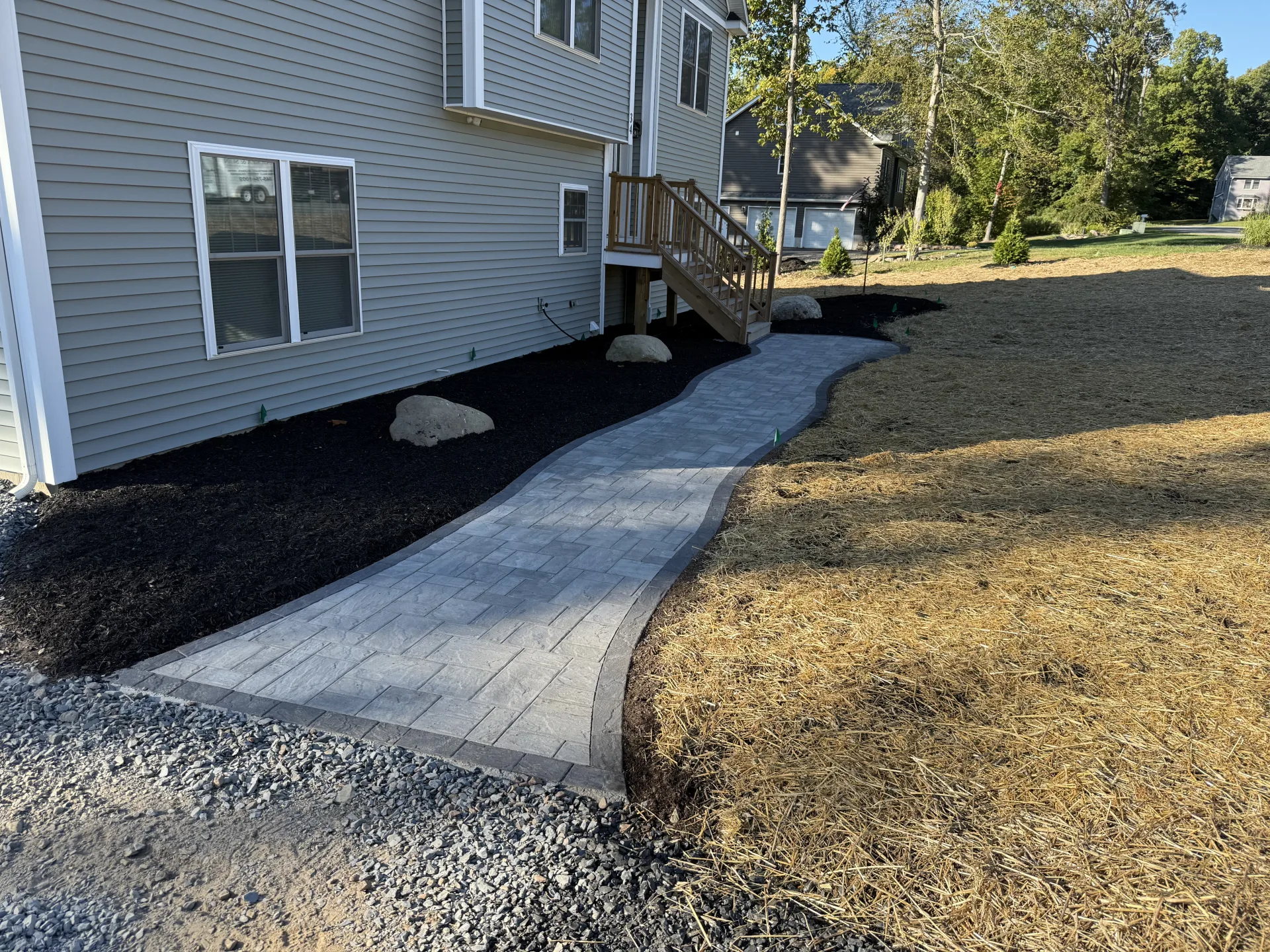
Newburgh properties often need the work sequenced. If the lawn is wet after every storm, drainage and grading should be reviewed before sod or hydroseeding. If a walkway, patio, fire pit, or retaining wall may be added later, the landscape design should preserve access and avoid installing beds where equipment will need to travel. A clear first conversation reduces rework.
Why do clay soil and grade matter in Newburgh?
Clay-heavy soil can hold water, compact around roots, and dry hard in hot weather. That makes lawns slow to establish and plantings more sensitive to poor preparation. Grade matters because water moving across a slope can wash out mulch, stress plants, or send runoff toward the house. A landscaping plan should account for both before materials are installed.
For lawn projects, that can mean soil preparation, topsoil, aeration, sod, hydroseeding, or a different seed choice. For planting beds, it can mean removing old roots, reshaping the bed, improving the planting zone, choosing climate-adapted species, and setting mulch at the right depth. For larger projects, it may mean coordinating with french drain installation or grading work first.
Should drainage be part of the landscaping conversation?
Yes, at least as a review item. Drainage is not always a separate project, but water movement affects nearly every outdoor improvement. Roof leaders, uphill yards, compacted soil, low lawn areas, and hardscape edges can all move water into the places homeowners are trying to improve. If that pattern is ignored, fresh sod can fail, mulch can wash out, and plant roots can stay too wet.
Take photos during or right after rain. Wide photos are more useful than closeups because they show the relationship between the house, driveway, slope, beds, and lawn. If water is the main issue, learn about our drainage solutions and note whether the problem is standing water, runoff, erosion, or a soggy lawn.
Do I need landscape design or maintenance?
Landscape design changes the structure and function of the yard. It may include plant selection, bed layout, grading, sod, hydroseeding, drainage coordination, walkways, or planning around future hardscaping. Maintenance keeps an already workable landscape clean through mowing, trimming, pruning, mulch refreshes, cleanup, and seasonal care.
If the property has the right layout but looks tired, lawn maintenance or cleanup may be enough. If the layout itself is wrong, the plants are too large for the house, the lawn is failing, or the yard has no clear structure, design-led landscaping is the better starting point.
Photos and Notes That Make the Estimate More Useful
Send a short list of the work area, your goals, the timeline, and the constraints. Include photos from the street, from the house, and from each side of the problem area. Mention gates, pets, steep driveways, parking limits, utilities, irrigation, or areas where equipment cannot go. If you want a project phased over time, say that early so the first phase supports the final plan.
Location details help too. A Newburgh yard near Balmville may have different access and shade patterns than a property near the Route 300 corridor. Nearby communities also vary: Cornwall-on-Hudson landscaping often involves hillside, rocky, wooded-edge conditions, while New Windsor includes suburban and commercial service needs.
What should the estimate clarify?
A useful estimate should do more than list materials. It should clarify what area is included, what preparation is needed, how drainage or grade will be handled, what plant or lawn approach is recommended, and whether maintenance is part of the plan after installation. For hardscape-adjacent projects, it should also clarify whether a patio, wall, steps, or walkway will affect the landscaping sequence.
Ask what is included in cleanup and disposal, what you need to do before the crew arrives, and what follow-up care matters after the work is complete. For plantings and sod, watering and early care are important. For drainage or grading, the next heavy rain is often the best real-world test of whether water is moving as planned.
Which service fits your property?
Start with landscaping in Newburgh and the Hudson Valley for planting, beds, sod, and yard installs. Review landscape design if the property needs a layout change, lawn care if the turf needs ongoing support, and hardscaping if patios, steps, walls, or walkways are part of the bigger plan.
Bernicker & Son serves properties throughout Newburgh and the surrounding Hudson Valley. When you are ready to discuss your property, request an estimate online or call (845) 754-1009.
FAQ: Newburgh landscaping before booking
What is the first thing to check before booking landscaping?
Check whether the issue is cosmetic, structural, or water-related. Cosmetic work may be mulch, edging, and planting. Structural issues involve grade, drainage, lawn failure, overgrown shrubs, access, or future hardscape plans.
Can Bernicker & Son handle landscaping and drainage together?
Yes. Landscaping and drainage are often connected in Newburgh yards. The team can review whether water management, grading, bed shaping, or a dedicated drainage solution should happen before plants or sod are installed.
Is spring the only good time to landscape?
No. Spring is busy for cleanup, planting, sod, and mulch, but late summer and fall can also be strong for lawn repair and planting because the weather is cooler. Larger grading, drainage, and hardscape-related planning should start earlier.
Can I phase the work?
Yes. Many homeowners start with cleanup, drainage, or grading, then add beds, sod, plantings, patios, or maintenance later. The key is planning the first phase so it does not block or disturb the final layout.
What is the fastest way to get a local answer?
Call (845) 754-1009 or submit the free estimate form. Include your location, photos, project goals, timing, and any drainage, slope, or access concerns.