
For early budgeting, our published landscaping ranges start at $800–$2,000 for a basic bed refresh, $3,000–$8,000 for a front-yard redesign, and around $8,000 and up for a broader yard renovation.
These are planning figures from our landscaping FAQ, not a quote for your home. The amount of removal, preparation, planting, and lawn work determines what fits.
If you want new beds, a cleaner front entrance, or a yard rebuilt after construction, start by deciding how much of the yard you want to change. A mulch refresh and a renovation that moves soil, replaces shrubs, and rebuilds lawn are different purchases. This guide covers landscape installation and renovation; our lawn care cost guide covers recurring upkeep.
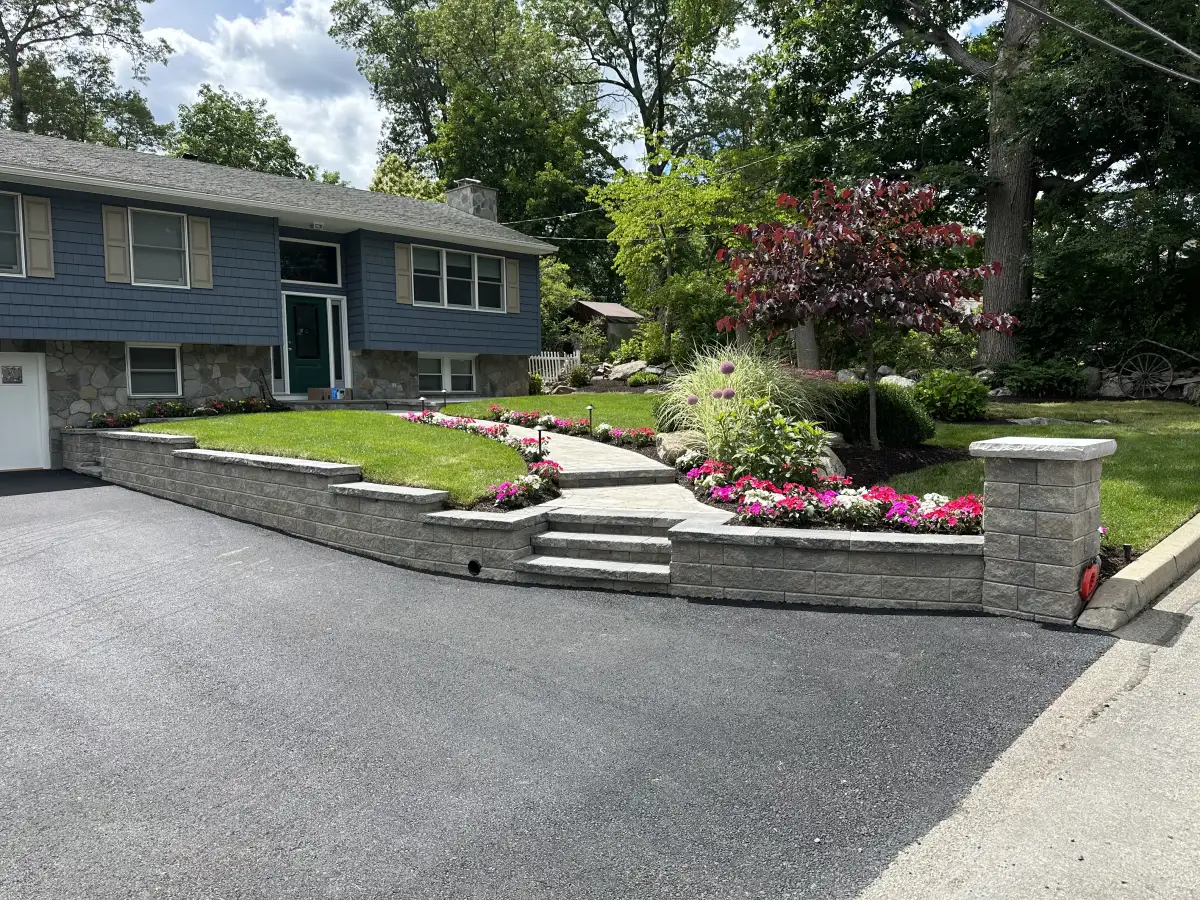
What different landscaping budgets can cover
The ranges below describe different scopes. A small area with difficult excavation can cost more than a larger area that only needs a light refresh.
| Type of work | Planning range | Scope to discuss |
|---|---|---|
| Basic bed refresh | $800–$2,000 | Bed cleanup, fresh mulch, and a few plants. |
| Front-yard redesign | $3,000–$8,000 | Plantings, edging, and mulch in a revised layout. |
| Broader yard renovation | From about $8,000 | Sod, grading, plantings, and beds; the total rises with scope. |
A patio, retaining wall, extensive drainage system, or outdoor kitchen should have its own defined scope. Do not assume those features are included in a planting budget. If a patio is part of your plan, use our patio cost guide alongside the landscape estimate.
Where the money goes beyond the plants
Removing what is there and reaching the work area
Old shrubs, roots, debris, and unwanted material must be dealt with before a new bed can be installed. Identify what will stay and what will leave. Narrow gates, steps, and a long carry from the driveway can change the equipment and labor needed, even when two yards have the same planting area.
Preparing soil and managing water
In Newburgh and nearby Hudson Valley communities, look at your actual yard: does water collect beside the walk, cross a bed, or leave a low patch too wet to use? That condition can change the work required before planting. Cornell’s site-assessment guidance includes soil texture, compaction, drainage, light, and growing space when selecting trees.
For new lawn areas, UMass Extension’s establishment guidance places evaluation, soil testing, grading, and preparation before planting. Needed drainage work belongs in the budget before the new surface goes down.
Plant quantities, sizes, and the finished surface
Compare the plant list, not just the word “landscaping.” Species, quantities, and nursery sizes define what you are buying. A smaller plant changes the initial look and the time needed to fill its space. Cornell also recommends matching plants to available growing space, so mature size matters alongside the purchase size.
For lawn rebuilding, compare sod installation and hydroseeding with preparation and follow-up care included. UMass notes that sod provides cover quickly at a higher cost than other establishment methods; both need suitable preparation and watering.
Phase the work without paying to undo it
If the full plan exceeds your budget, narrow the first phase. For example, you might renew the front beds now and leave a backyard sitting area for later. Use landscape design to settle the future layout before placing plants in the route equipment will need to reach that area.
Where necessary, soil and drainage corrections come before lawn installation. UMass recommends installing needed subsurface drainage before finishing the turf area and protecting exposed soil from erosion. A paused project still needs a stable, protected surface.
Ask for a first-phase price and separately priced options. That lets you choose between a smaller finished area and a broader plan spread over time. Keep healthy, well-placed plants where they fit; reducing unnecessary replacement is different from deleting preparation the new landscape needs.
Compare the same finished result
A lower total is hard to judge if one estimate includes removal and restoration while another covers delivery and planting only. Before accepting a proposal, make sure it identifies:
- the beds, lawn areas, and existing plants included in the work;
- removal, hauling, soil preparation, grading, and any drainage work;
- plant quantities and sizes, edging, mulch, and lawn materials; and
- cleanup, disturbed-lawn restoration, and who handles watering and aftercare.
For Newburgh, New Windsor, and Cornwall-on-Hudson homes, share your budget, a few wide photos, and the change you most want to make. Your yard’s access, condition, and scope are more useful than a national average when it is time to price the work.
Landscaping cost questions
Is $5,000 enough for landscaping?
A $5,000 budget falls within the $3,000 to $8,000 front-yard redesign planning range published on our landscaping page. It may suit a focused planting, edging, and mulch project, but extensive removal, drainage, walls, or lawn rebuilding can change what fits. Ask for a defined first phase rather than assuming it covers the whole yard.
Can I estimate landscaping cost per square foot?
Square footage helps measure beds and lawn, but one rate cannot accurately price a mix of planting, removals, grading, drainage, and walls. Ask for quantities and a total for each part of the work. Compare per-square-foot figures only when preparation, materials, access, and restoration are equivalent.
How can I lower landscaping costs without skipping important work?
Reduce the area or number of features in the first phase, retain healthy plants that fit the plan, and compare plant sizes. Keep needed soil preparation and water management in the scope. Coordinate future access before installing beds or lawn that later construction would disturb.